Why Temperature Monitoring Matters for Wine Shipments
Protect Every Bottle. Preserve Every Vintage.
Wine is more than a beverage; it’s a carefully crafted product that reflects years of expertise, investment, and passion. Yet all that effort can be compromised during transportation if proper temperature conditions are not maintained.
Whether shipping a single bottle directly to a consumer or transporting pallets of premium wine across the globe, temperature exposure remains one of the greatest threats to wine quality.
For wineries, distributors, wine clubs, and collectors, understanding and monitoring shipment temperatures is becoming increasingly important.
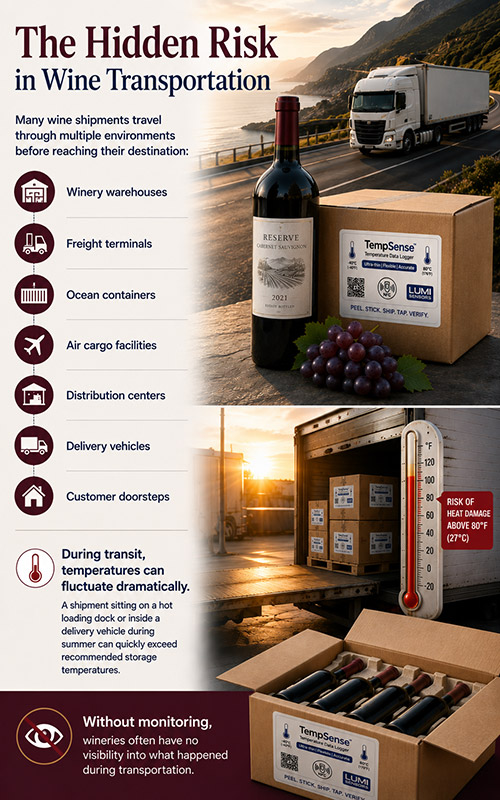
The Hidden Risk in Wine Transportation
Many wine shipments travel through multiple environments before reaching their destination:
- Winery warehouses
- Freight terminals
- Ocean containers
- Air cargo facilities
- Distribution centers
- Delivery vehicles
- Customer doorsteps
During transit, temperatures can fluctuate dramatically.
A shipment sitting on a hot loading dock or inside a delivery vehicle during summer can quickly exceed recommended storage temperatures.
Without monitoring, wineries often have no visibility into what happened during transportation.
What Happens When Wine Gets Too Hot?
Heat is one of wine’s biggest enemies.
Exposure to elevated temperatures can cause:
Premature Aging
High temperatures accelerate chemical reactions within wine, causing it to age much faster than intended.
Flavor Degradation
Wine can lose delicate aromas and flavor characteristics that make each vintage unique.
Oxidation
Heat can increase oxidation, resulting in flat or dull-tasting wine.
Cork Expansion and Leakage
Excessive temperatures may cause wine to expand inside the bottle, potentially pushing corks outward and allowing oxygen to enter.
Customer Complaints and Returns
Even if damage is not immediately visible, customers may perceive reduced quality, leading to refunds, returns, and damage to brand reputation.
Can Cold Temperatures damage Wine?
Yes.
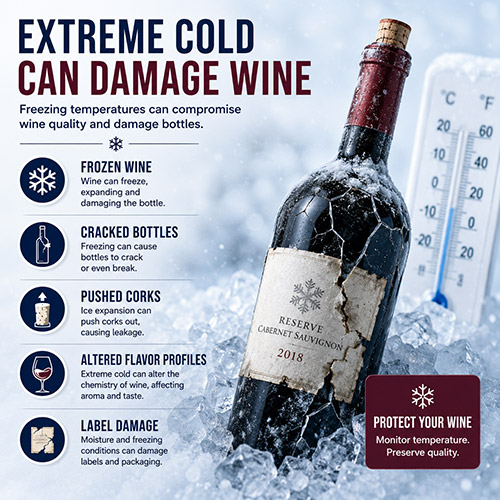
Extreme cold temperatures can also create problems.
Potential risks include:
- Frozen wine
- Cracked bottles
- Pushed corks
- Altered flavor profiles
- Label damage
While heat is typically the greater concern, both extremes can negatively impact shipment quality.
Recommended Temperature Ranges for Wine
| Wine Type | Recommended Storage Temperature |
|---|---|
| Red Wine | 55–65°F (13–18°C) |
| White Wine | 45–55°F (7–13°C) |
| Sparkling Wine | 40–50°F (4–10°C) |
| Long-Term Cellaring | Approximately 55°F (13°C) |
Even short periods of exposure to temperatures above 80°F (27°C) may negatively affect premium wines.
Why More Wineries Are Monitoring Shipment Temperatures
As direct-to-consumer wine sales continue to grow, wineries face increasing pressure to ensure products arrive in optimal condition.
Temperature monitoring provides:
- Quality Assurance – Verify that products remained within acceptable shipping conditions.
- Customer Confidence – Provide evidence that wine was transported responsibly.
- Reduced Claims – Resolve disputes with objective shipment data.
- Brand Protection – Protect the reputation of premium wine brands.
- Supply Chain Visibility – Identify transportation routes or carriers that may be creating temperature-related risks.
Introducing TempSense™ for Wine Shipping
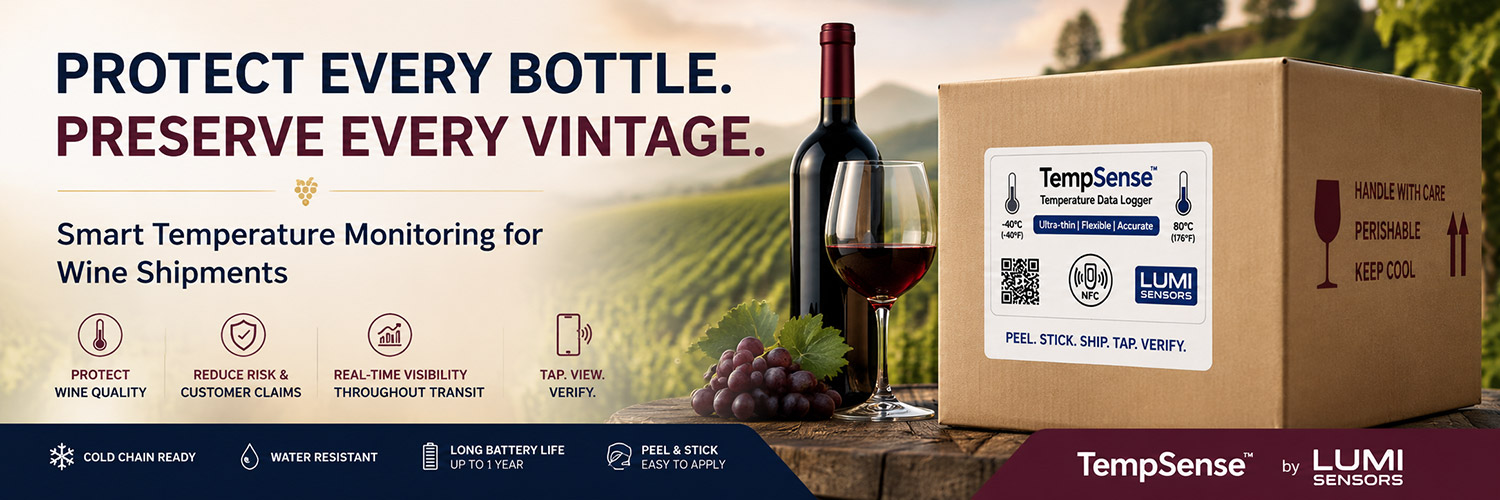
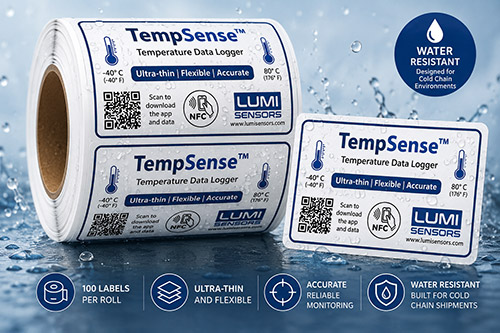
TempSense™ by LUMI Sensors is an ultra-thin peel-and-stick temperature data logger designed to provide simple and affordable shipment temperature monitoring.
Unlike bulky reusable loggers, TempSense™ is applied directly to a shipping box and travels with the shipment.
Key Features
- Ultra-thin flexible smart label
- Peel-and-stick deployment
- NFC smartphone access
- Configurable sampling intervals
- Water-resistant design
- Up to 1-year battery life
- Single-use operation
- Shipment temperature history available with a simple smartphone tap
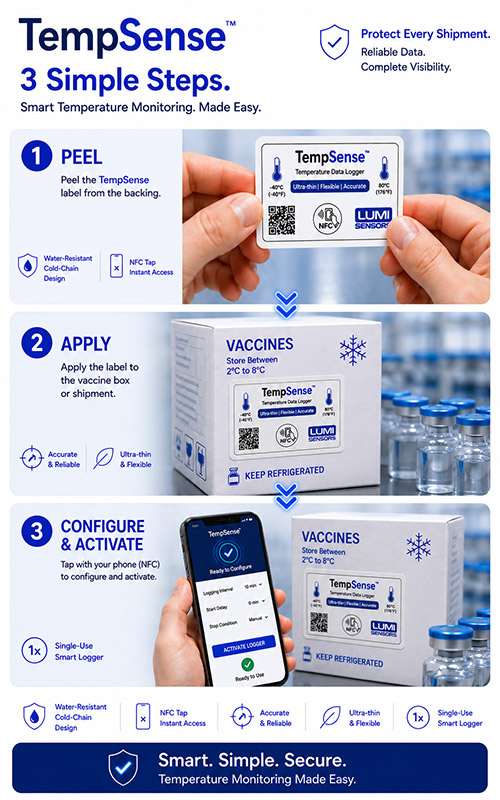
How TempSense™ Works
- Apply – Attach the TempSense™ label to a wine shipment box.
- Configure – Use an NFC-enabled smartphone to configure temperature logging settings.
- Ship – The label records temperature data throughout transit.
- Verify – Upon arrival, tap the label with a smartphone to review shipment temperature history.
Ideal Applications
TempSense™ is well-suited for:
- Premium wineries
- Wine clubs
- Wine subscription services
- Direct-to-consumer wine shipments
- Wine distributors
- Importers and exporters
- Wine fulfillment centers
- Luxury wine collectors
- Auction houses
- Fine wine logistics providers
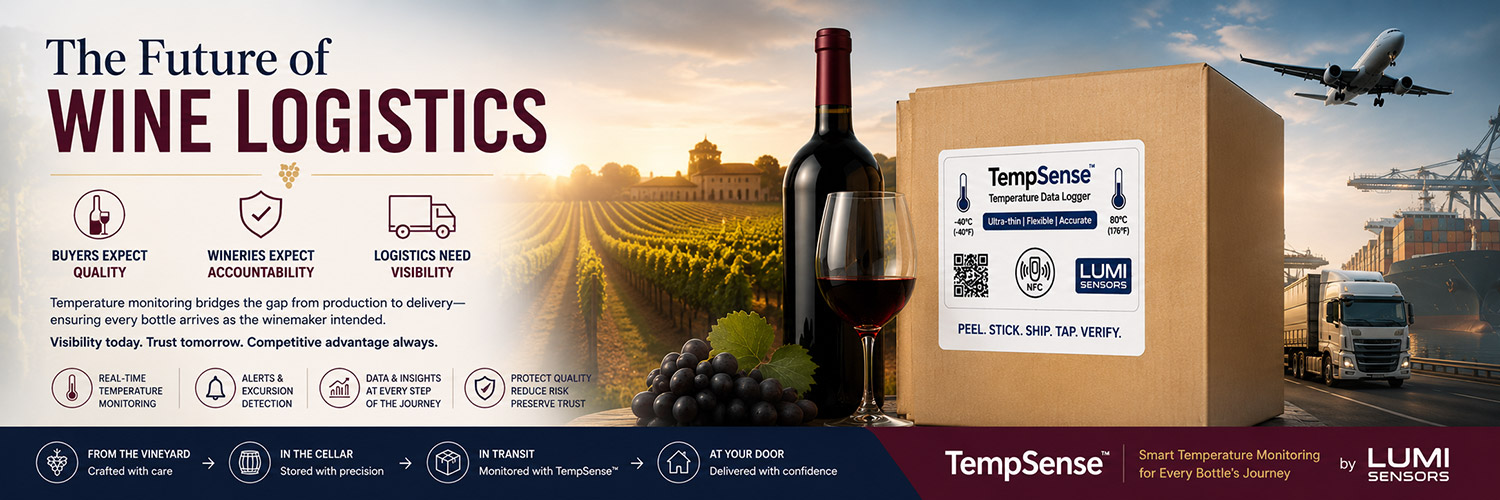
The Future of Wine Logistics
Today’s wine buyers expect quality. Wineries expect accountability. Logistics providers need visibility.
Temperature monitoring helps bridge the gap between production and delivery, ensuring every bottle arrives under the conditions intended by the winemaker.
As the wine industry continues to embrace smarter supply chains, temperature visibility is becoming a competitive advantage.
TempSense™ helps wineries, distributors, and logistics providers protect product quality, reduce risk, and preserve customer trust.
Protect Every Bottle’s Journey
Whether you’re shipping a single case or thousands of bottles worldwide, TempSense™ provides an easy way to verify shipping conditions and gain confidence in your cold-chain logistics.
TempSense™ — Smart Temperature Monitoring for Every Shipment.
Visit LUMISENSORS.com to learn more.